Life, Meaning, and Purpose: Protecting our National Parks – 29th Annual Wege Speaker Serices

THE 29TH ANNUAL WEGE SPEAKER SERIES FEATURES CELEBRATED ENVIRONMENTAL ADVOCATE AND AUTHOR AUDREY PETERMAN

Award-winning advocate and author of “From My Jamaican Gully to the World and Back” to lecture virtually on Thursday, April 23, 2026

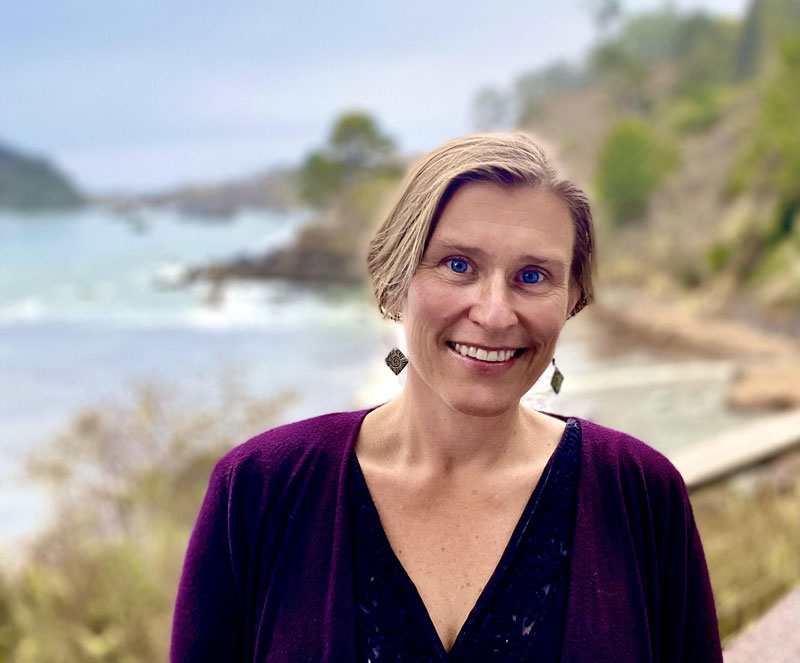
Grand Rapids, Michigan —  The Wege Foundation welcomes celebrated environmental advocate and author Audrey Peterman as the featured guest for the 29th Annual Wege Speaker Series. The event will be held virtually on Thursday, April 23, 2026, at 4:00 PM EDT and is free and open to the public. 

This year’s lecture explores the intersection of environmental conservation and social equity. Audrey Peterman’s journey began with a 1995 road trip that led to a personal discovery of the U.S. National Parks. Struck by the profound beauty of the land – and the startling lack of visitor and employee diversity – she and her husband, Frank embarked on a mission they’re still pursuing 30 years later. Their goal: Bridge the gap between the National Parks and urban populations for urgently needed mutual benefits. 

“Our National Park System urgently needs our support right now as they face threats that lead to their decline. All Americans that know what’s at stake can be inspired to rally around them. But almost half the population may not see the threat or be inspired to act, because they simply do not know them. Only 23 percent of users of the National Parks are Americans of color. This means they also miss the benefits of inspiration, of improved physical wellness and connection. Doctors around the country are prescribing nature walks and outdoor activities to reduce incidences of some illness. Plus, the parks include places where history turned, and show that Americans of every racial and ethnic group made pivotal contributions to the development of our democracy.”

Audrey’s drive is rooted in her idyllic beginnings in rural Jamaica, where she developed a foundational respect for the Earth. These roots gave her the confidence to challenge the status quo of the U.S. environmental sector. In her recently updated memoir, From My Jamaican Gully to the World and Back, she recounts the experiences that shaped her into a world-class leader. She offers a unique perspective on climate readiness and champions inclusion of every single human, based upon our collective vulnerability and the right of every human to participate in solutions.

Seeing less than a handful of Americans of color among thousands of American and foreign visitors, Audrey and her husband Frank founded Earthwise Productions, Inc., offering consulting services to the National Park Service and environmental organizations to provide information to under-served communities. Through speaking engagements, prolific writing, tours of the National Parks, and briefing Congress and the White House, she helped develop an African American presence in the conservation world. She served on the boards of multiple conservation organizations – including five three-year terms at the National Parks Conservation Association – and helped establish grassroots environmental organizations such as “Keeping It Wild” in Atlanta.

“We’re very excited to have such an enthusiastic promoter of universal access to national parks as our presenter,” says Wege Foundation CEO, James Logan. “Her lived experience and focus on exposing people of color to the wonders and beauty of our national parks connects to the Foundation’s focus on conservation stewardship and increased access to nature and environmental education. We hope that her presentation will inspire people to go and experience the parks as well as play a role in protecting and preserving them.”

The impact of Peterman’s work resonates across the National Park System and beyond. Her legacy includes co-founding the Diverse Environmental Leaders Speakers Bureau. Most notably, her advocacy was instrumental in shaping President Obama’s 2017 Memorandum –  Promoting Diversity and Inclusion in Our National Parks, National Forests, and Other Public Lands and Waters.

“The glorious thing about having a relationship with the National Parks is that it’s not arduous, but rather a continually unfolding adventure. The benefits we get from helping the Park Service fulfill its mission to protect the parks into perpetuity, ‘for the benefit and enjoyment of this and future generations,’ is greater than I can express. I want everyone else to be able to enjoy the same opportunity and make an impact,” she says.

More About Audrey Peterman:

Audrey Peterman is the co-founder of The Diverse Environmental Leaders Speakers Bureau and a nationally recognized environmentalist. She is the recipient of numerous honors, including the Environmental Hero Award from National Oceanic and Atmospheric Administration (NOAA); the Marjory Stoneman Douglas Outstanding Citizen Advocate Award and the Centennial Leadership Award from the National Parks Conservation Association; the Environmental Justice 21st Century For the People Award from the National Wildlife Federation; and Lifetime Achievement Awards from Outdoor Afro, Black Meetings and Tourism and The North American Environmental Educators Association.

Please register at: wegespeaker2026.eventbrite.com


About The Wege Foundation

Founded in 1967 by Peter M. Wege, The Wege Foundation focuses on planting seeds that develop leaders in economicology, health, education, and arts, and enhance the lives of people in West Michigan and around the world. For more information, go to wegefoundation.com.

Congratulations to the Wege Prize 2025 Winning Teams!

2025 Wege Prize winners announced: Top three student teams from schools worldwide share in $65,000 USD prize pool for sustainable designs that address malnutrition, textile waste, and wastewater pollution.

From left to right: MC Bridget Clark Whitney, Olivia Awuor Okinyi of Eco Nasi, Brenda Maembe of Agpress, Iván Toro Pineda, Vishwa Maharajan, and Aayushi Kapilbhai Barchha of Envirovex, and Charles Otieno Oyamo of Rethread Africa.

Grand Rapids, Michigan, USA June 4, 2025 — In an exciting culmination of pioneering ideas, expert guidance, teamwork, and a passion for advancing the circular economy, the finale of Wege Prize 2025 clinched winning spots for the top three teams. Organized by Ferris State University’s Kendall College of Art and Design, this international design competition inspires interdisciplinary five-person student teams from around the world to collaborate on game-changing, sustainable solutions to today’s “wicked problems” by redesigning the way economies work in support of a circular economy, with each of the five finalist teams sharing in the competition’s $65,000 USD in prize money.

Announced during the competition’s dramatic finalist presentation and awards event in May, the first-, second- and third-place winning teams’ inventive concepts were recognized for their sustainable, real-world approaches to the economic, environmental, and societal challenges of malnutrition, textile waste, and wastewater pollution through designs that align with the circular economy’s restorative, closed-loop production and material consumption cycle.

“Instead of a linear model – take, waste and dispose – these teams are pioneering pathways towards a circular economy; one that is regenerative, restorative, and intentional by design,” says Gayle DeBruyn, a KCAD professor who is on the organizing team for Wege Prize. “It’s exciting to see the teams’ innovative ideas take shape with the guidance of Wege Prize’s dedicated judges and evolve into real-world solutions.”

The students from Wege Prize 2025 multidisciplinary winning teams collaborated across majors in science, resource management, agriculture, accounting, economics, engineering and communications from educational facilities in six countries worldwide. Together, the teams advanced through the four-phase, nine-month competition from an initial pool of 90 teams from 31 countries.

Recognized for reinventing conventional production and consumption practices through environmentally and economically sound approaches refined through in-depth research, testing, and prototyping with direct feedback from the competition’s panel of expert judges, the winners of Wege Prize 2025 are:

  • 3rd Place ($10,000): Envirovex, a team reducing the spread of antimicrobial resistance through bio-base wastewater treatment.

  • 2nd Place ($20,000): Rethread Africa, a group developing sugarcane bagasse into a synthetic fabric alternative that decomposes without industrial composting.

  • 1st Place ($30,000): Agpress, a team using mealworms and maize to develop protein-enriched flour to address malnutrition.

Two other student teams, Dry Fresh Solution and Eco Nasi, each received $2,500 awards as finalists.

“We have participated in Wege Prize before, but each time we built on what we did before,” says Charles Otieno Oyamo of Rethread Africa, who has competed since 2023.

Anthony Ilalio Mbunju, lead of Senene Farm who won second place in Wege Prize 2024, mentored 2025’s winning team, Agpress, and is currently writing books, attending conferences, forming partnerships with past colleagues, and opening businesses.

“Winning a prize is one thing, but establishing a business is a whole other story,” said Mbunju to students from the winning teams during this year’s Judges Forum. “What I learned last year is you should really value the process you went through to reach today – what are you leaving with here, today? Are you living as a leader?”

Wege Prize solutions are making a real-world impact. The 2023 winning team Banana Leather was featured on NBC News and later won the $1 million Hult Prize for their Banofi Leather eco-conscious leather alternative made from banana crop waste. And in 2025, their team lead, Jinali Mody, was named a Forbes 30 Under 30 winner.

Other teams are being noticed as well. Winner FruiFresh from 2024 is helping Rwanda’s small farmers and sellers reduce produce spoilage by way of the team’s pioneering charcoal cooling system that keeps produce fresh without refrigeration or electricity. In addition, 2021 team The Chilensis advanced to prestigious business incubators, and the 2019 finalist Rutopia, an eco-sensitive tourism concepts company, has been covered by Forbes, the United Nations, and more, gaining further funding and support.

Brenda Maembe, team lead for 2025 Wege Prize winner Agpress, noticed the impact and growth of previous Wege Prize groups and hoped Wege Prize’s judges would connect with her team’s vision for mitigating malnutrition. “Those congratulations that we got [from the judges] – those are what inspired us – that they do believe in us, so we should keep on believing in ourselves and advance it even farther and we kept pushing for that,” she says.

Wege Prize is made possible through the continuing financial support of The Wege Foundation and KCAD, opening these unique opportunities for undergraduate, graduate, and postgraduate students around the world — and helping take strides toward a greater circular economy.

Details on the winning teams are at www.wegeprize.org/2025-teams; high-resolution photos and imagery are found https://we.tl/t-4R4Z67KWmQ. For information, interviews and more imagery, contact C.C. Sullivan.

INFLUENTIAL SCIENTIST AND AUTHOR DR. SUZANNE SIMARD TO DISCUSS THE HIDDEN COMMUNICATION OF FORESTS.

The author of ‘Finding the Mother Tree’ will give a virtual lecture on Thursday, April 24, 2025

Grand Rapids, Michigan – April 1, 2025 – The 28th Annual Wege Speaker Series (www.wegespeakerseries.com) returns on Thursday, April 24, 2025 at 4pm EDT. This lecture will return to a virtual format.

Presenting is Dr. Suzanne Simard, Professor of Forest Ecology at the University of British Columbia and author of Finding the Mother Tree. Her groundbreaking research has reshaped our understanding of forests, revealing them as deeply interconnected communities. At the heart is the Mother Tree—a central figure in forest resilience and regeneration.

Dr. Simard will explore how the wisdom of forests can guide us in addressing the urgent challenges of climate change, and environmental justice. Just as trees in a forest collaborate to ensure their collective survival, human societies must embrace cooperation and reciprocity to build more sustainable and resilient communities.

A pioneer in forest ecology and a vital advocate for Indigenous-led land stewardship, Simard has profoundly influenced the fields of conservation, climate adaptation, and stewardship. This lecture will highlight how applying these natural principles can lead to more effective conservation strategies and a healthier planet for future generations.

“We’re very excited to have an individual so highly respected as Dr. Simard presenting this year” relates Wege Foundation CEO, James Logan. “Her research, while being some of the most groundbreaking in the scientific community, brings to light many of the challenges we face when taking the health of our forests and trees into consideration. We can only hope her message can become a critical point in the fight for protecting our land and its resources.”

Dr. Simard has presented at conferences around the world, including her TEDTalk “How trees talk to one another.” In addition, her work has influenced filmmakers such as James Cameron with the Tree of Souls concept in the blockbuster movie Avatar. She was named one of Time Magazine’s 100 most influential people in the world for 2024.

Please register at: wegespeaker2025.eventbrite.com

About The Wege Foundation

Founded in 1967 by Peter M. Wege, The Wege Foundation focuses on planting seeds that develop leaders in economicology, health, education, and arts, and enhance the lives of people in West Michigan and around the world. For more information, go to wegefoundation.com.

Teams Announced in Wege Prize 2025

90 student teams move on to Phase 1 Preliminary Judging.

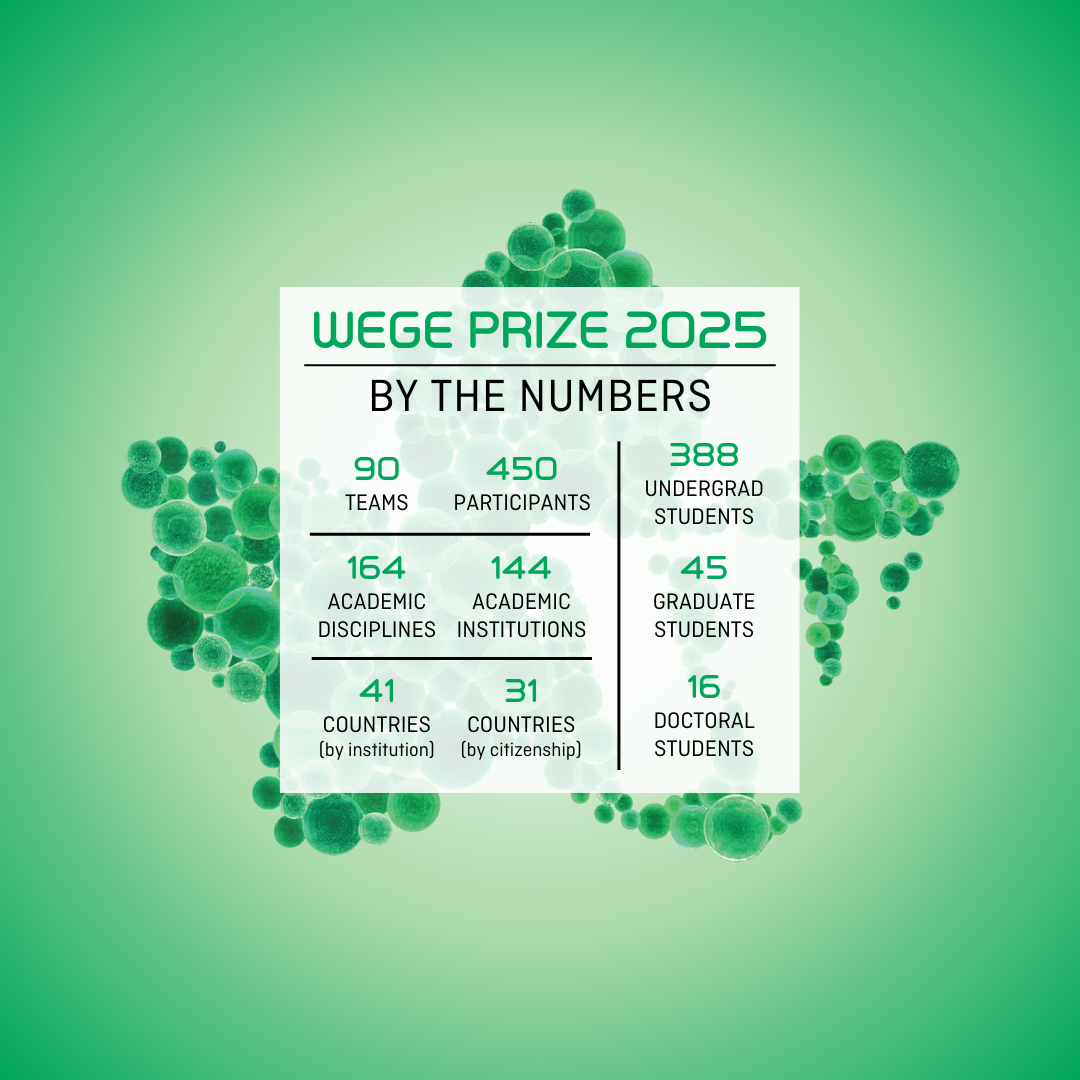
These 450 participants come from 144 academic institutions in 41 countries around the world.

Grand Rapids, Mich., October 16, 2024 – This year, a precedent-setting applicant group of 130 five-person teams worldwide were narrowed down to 90 teams for Phase 1, the largest pool of participants in Wege Prize’s 12-year history, to compete in the international student competition for circular innovation. In all, the 90 collaborating teams represent 450 students hailing from 31 countries, including 164 academic disciplines from 144 academic institutions in 41 countries. According to Wege Prize lead Gayle DeBruyn, the preliminary judging panel brings together regional, multidisciplinary experts, who will provide valuable feedback and expertise to these teams, advancing a selection of around 30 teams to Phase 2. Newly added to Wege Prize’s expanded, 15-person panel of Preliminary Judges, says DeBruyn, are:

  • Yumiko Jakobcic, Ph.D., Director of Grand Valley State University’s Office of Sustainability Practices

  • Fernando Ramirez, co-founder and designer of Common Object Studio

  • Audrey Whaling, program manager for the Emerging Lansing 2030 District

  • Deborah M. Steketee, Ph.D., Professor Emerita of Sustainable Business at Aquinas College

  • Milinda Ysasi, CEO of Grow, and the City of Grand Rapids’ 2nd ward Commissioner.

Along with the Preliminary Judges, Wege Prize’s global panel of Core Judges round out the competition’s diverse and distinguished experts. This year, the core group is joined by Skot Welch, Principal/Founder of Global Bridgebuilders (GBB), an international firm focusing on organizational development, cultural transformation and inclusion. You can read the full bios of all of the judges on this page.

When the seven-month competition moves into its second phase, Wege Prize’s Core Judges will guide the remaining five-person teams as they work to advance through the four-phase competition by refining their innovative concepts into authentic uses that support the circular economy. The core judges’ subsequent selection of 15 semi-finalist teams in January will be followed by five chosen finalist teams in March, who will present their completed concepts in May, live, for the judging panel as they vie for Wege Prize’s top spot and $30,000 USD. Second and third place teams will earn $20,000 and $10,000, respectively, with each of the two remaining finalist teams receiving $2,500 for their inventive concepts. England-based core judge Jo Williams says the circular economy isn’t about tweaking the linear economy, but about embracing a completely different system where materials and capital are continually circulated:

“What the circular economy offers… is a different way of creating profit,” says Williams. “And in doing so, it also creates a different way or recognizes, that the system we live in is equally important, so we’ve got to look at value in a broader sense.”

To date, more than 1,750 students have participated in Wege Prize, helping promote the circular economy among the multidisciplinary, cultural, and institutional participants, with the competition’s top teams winning more than $435,000 in total cash awards during the past 11 competitions. Many teams have progressed insights gleaned through Wege Prize’s judges though incubator hubs and private business models, furthering real-world solutions to environmental, energy, waste, hunger, agricultural and other challenges.

“The dynamic synergy between Wege Prize’s student teams and the competition’s expert judges creates pathways that move the inventive concepts into workable solutions that support a circular economy,” says Gayle DeBruyn, KCAD professor and Wege Prize organizer. “As more student teams come together for Wege Prize, our larger judging panel ensures that every team’s inventive solution is considered with absolute attention to each aspect of the product or service’s design and how it advances the circular economy, sustainable business operations, and the natural environment.”

For inquiries on press opportunities, interviews, and more, contact Karen M. Shan at karen@ccsullivan.com.

Read this article on the wegeprize.org website.

Applications Open for Wege Prize 2025

Grand Rapids, Michigan, USA August 19, 2024

Big ideas for making the world better can earn big money for college and university students.

Now through October 6, applications are open for Wege Prize 2025, the international design competition where top teams win a prize pool of $65,000 USD for their sustainable, circular approaches to solving some of today’s biggest problems in pollution, hunger, waste and more.

Wege Prize winners in the past few years included African students with a charcoal cooling concept that slashes post-harvest losses for vegetable farmers, U.S. students with an innovative wastewater treatment technique to extract raw materials for reuse, and Canadian students addressing the issue of e-waste by extracting valuable rare earth elements (REEs).

Have an exciting idea to share? See details here.

 About Wege Prize 2025

Organized by Kendall College of Art and Design of Ferris State University (KCAD), Wege Prize is an annual competition that ignites game-changing solutions for the future by inspiring college and university students worldwide to collaborate in teams across institutional, disciplinary, and cultural boundaries to redesign products and systems for a more circular economy.

With the support of The Wege Foundation, Wege Prize has advanced students work worldwide for a more sustainable future since 2013. The competition’s multi-disciplinary, five-person teams identify a “wicked problem” to address and develop a compelling solution — products, services, systems, and more — that builds on core principles of the circular economy by:

  • Helping accelerate the transition to a circular economy and a shift towards renewables.

  • Providing unique value and exploring untapped potential through innovation.

  • Demonstrating the potential for marketability, profitability, and financial sustainability.

  • Exhibiting research, user consideration and affected communities in all aspects of the solution’s design.

During the nine-month process, five-person teams compete to advance through the competition’s four phases, growing their ideas from informal proposals into real-world solutions informed by research, market analysis, prototyping and testing. At each phase, direct feedback from experts in sustainable business, design, the circular economy, materials, and more help the teams strengthen their ideas for real-world applications. Then, five selected finalist teams will present their game-changing ideas next May, with each of the winning teams sharing in the competition’s $65,000 USD prize pool.

Last year, Wege Prize encompassed an initial pool of 58 competing teams in varied academic disciplines representing 38 countries across five continents. Apply at www.wegeprize.org/apply.

By collaborating, designing, planning, and testing, the teams’ winning solutions earn wide attention in the news media and are recognized by their institutions.

For press inquiries, more information, and for interviews of Wege Prize’s past winners and current organizers, contact C.C. Sullivan.

Congratulations to the Wege Prize 2024 Winning Teams!

Student Winners From Africa, Costa Rica, and U.S. Universities Recognized for Solutions to Complex Challenges, Benefiting the Circular Economy  

2024 Wege Prize winners announced: First-place team from Africa awarded $30,000 for slashing post-harvest tomato losses with super-efficient charcoal cooling huts.

 Grand Rapids, Michigan, USA June 04, 2024 — Three forward-thinking university student teams from around the globe have emerged as the top winners in 2024 Wege Prize. Recognized for their game-changing solutions to further a circular economy, each of the team’s sustainable approaches to the development and consumption of products addresses unwanted waste and consumer benefits through new, real-world designs.

Organized by Kendall College of Art and Design of Ferris State University (KCAD), Wege Prize invites five-person student teams worldwide to collaborate for sustainable solutions to today’s “wicked problems” in ways that support a circular economy. Each of the five finalist teams is sharing in the competition’s $65,000 USD in prize money for developing solutions that address waste, hunger, and the climate.

 Wege Prize has identified winning teams in the interdisciplinary competition for more than a decade, with this year’s top three groups hailing from three countries and six academic institutions. The awarded teams ascended from an initial pool of 58 competing teams representing 38 countries across five continents as they advanced through a phased selection of contenders during the nine-month, multiphase competition.

 Faced with the task of redefining conventional production and consumption practices, the competition’s teams are challenged to invent environmentally and economically sound protocols through multidiscipline, immersive process across diverse areas of study, cultures, and institutions. Their in-depth research, testing, and prototyping are refined through direct feedback from the competition’s panel of expert judges.

 “We are excited for this year’s winners and proud of all our student teams,” says Gayle DeBruyn, a KCAD professor who leads Wege Prize. “With the teams’ innovative ideas helping advance a regenerative, circular economy by reinventing how products are developed and services are provided, and the dedication and guidance of our judges, we move closer to real-world solutions to pressing global issues.”

The winners of Wege Prize 2024 are:

  • 3rd Place ($10,000): EcoFeed Pioneers, a team evolving animal feed to reduce reliance on imported scarce crops by devising innovative biorefinery techniques to create a sustainable food supply.

  • 2nd Place ($20,000): Senene Farm, a group taking on Tanzania’s child malnutrition by increasing the production of the Senene insect as an alternative protein source through a rearing facility that creates a more circular production cycle.

  • 1st Place ($30,000): FruiFresh, a team working to alleviate Rwanda’s post-harvest tomato losses with evaporative and energy-efficient charcoal cooling facilities crafted from locally available materials
    for produce storage.

 Two other student teams, Huuzagro and EcoCycle, each received $2,500 awards as finalists.

A slide from Senene Farm’s presentation.

“This competition gave platform, time and space to come together and think on a possible solution that can bring us to work together,” says Anthony Ilalio Mbunju, lead of second-place 2024 Wege Prize winner, Senene Farm. “At the global level we want to contribute to be part of the solution that is working to make sure that we are ensuring food security – Wege Prize forces you to define what you need, who you are going to collaborate with.”

Claudine Kamanzi, lead of FruiFresh, the first-place winner, says one of the team’s most memorable Wege Prize experiences was conducting surveys in different markets to validate their idea. “Wege Prize opened us to think far,” she says, adding after making it through the first phase, the team was encouraged to keep going. “We keep saying, ‘This is our beginning. We have to keep pushing.’”

Claudine Kamanzi presenting for team FruiFresh

Wege Prize solutions are making a real-world impact. With participants from diverse academic programs at leading universities worldwide, students bring perspectives from U.S. Ivy League schools to national science and technology universities in Africa, Central American, Europe, the Far East, and more.

The 2023 winning team Banana Leather, covered on NBC News, went on to also win the $1 million Hult Prize for their Banofi Leather eco-conscious leather alternative. Others, like 2020 Wege Prize winner Hya Bioplastics and the 2021 team The Chilensis, have advanced to prestigious business incubators that lay the groundwork to implement their prize-winning ideas. Another, the 2019 finalist Rutopia with eco-sensitive tourism concepts, has been covered by top editors at Forbes and gained further funding and support.

Wege Prize is made possible through the continuing financial support of The Wege Foundation and KCAD, opening these unique opportunities for undergraduate, graduate, and postgraduate students around the world — and helping take strides toward a greater circular economy.

Photo credit to Dianne Carol Burdick. For information, interviews and more imagery, contact C.C. Sullivan.

Wege Speaker Series Wednesday, April 24, 2024

RENOWNED ENVIRONMENTAL EDUCATOR DR. SARAH JAQUETTE RAY TO ADDRESS THE EMOTIONAL TRAUMA OF CLIMATE CHANGE
The author of ‘A Field Guide to Climate Anxiety: How to Keep Your Cool on a Warming Planet’ will lecture on Wednesday, April 24, 2024
Grand Rapids, Michigan – April 4, 2024 – The 27th Annual Wege Speaker Series (www.wegespeakerseries.com) returns on Wednesday, April 24, 2024 at 4pm. For the first time in 5 years, the event will again be live and hosted at the Aquinas College Performing Arts Center.
Presenting is Dr. Sarah Jaquette Ray, author, professor and chair of environmental studies at California State Polytechnic, Humboldt. An environmental humanist with a BA in Religious Studies, an MA in American Studies and a PhD in Environmental Sciences, Studies and Policy, Dr. Ray draws on a eclectic range of disciplines in the service of climate justice.
“Many of us feel powerless about climate change, in part because we feel small relative to the immense scale of the crisis,” laments Dr. Ray. “This explains why such a large number of people in America care about climate change, yet so few are doing anything about it in their lives.”
Based on insights from her book, A Field Guide to Climate Anxiety: How to Keep Your Cool on a Warming Planet (California, 2020), Dr. Ray will talk about the role of mindsets and emotions in leveraging political change for climate justice. Using neuroscience, social psychology and social movements, Ray will outline strategies for living with anxiety, grief and despair, but also—and crucially—engaging with joy, self-determination and pleasure.
“With the work we support at our local educational institutions and the challenges we face related to climate, Dr. Ray’s message couldn’t be more relevant,” says James Logan, CEO/President of The Wege Foundation. “We are looking forward to using her studies to help engage with the younger generations.”
Ray has published on emotions and the climate movement in the LA Times, Scientific American, The Cairo Review of Global Affairs, Edge Effects, KCET and Zocalo Public Square. She is also a certified mindfulness facilitator through the UCLA Mindfulness Awareness Research Center.
Please register by April 17, 2024 at: aquinas.edu/wegespeaker
To attend virtually, wegespeaker2024.eventbrite.com

COLLEGIATE WINNERS ACROSS THE GLOBE HONORED FOR REAL-WORLD SOLUTIONS TO WICKED PROBLEMS, BENEFITTING THE CIRCULAR ECONOMY

2023 Wege Prize winners announced: First-place U.S. team awarded $30,000 for alternative, sustainable leather material from banana plants.

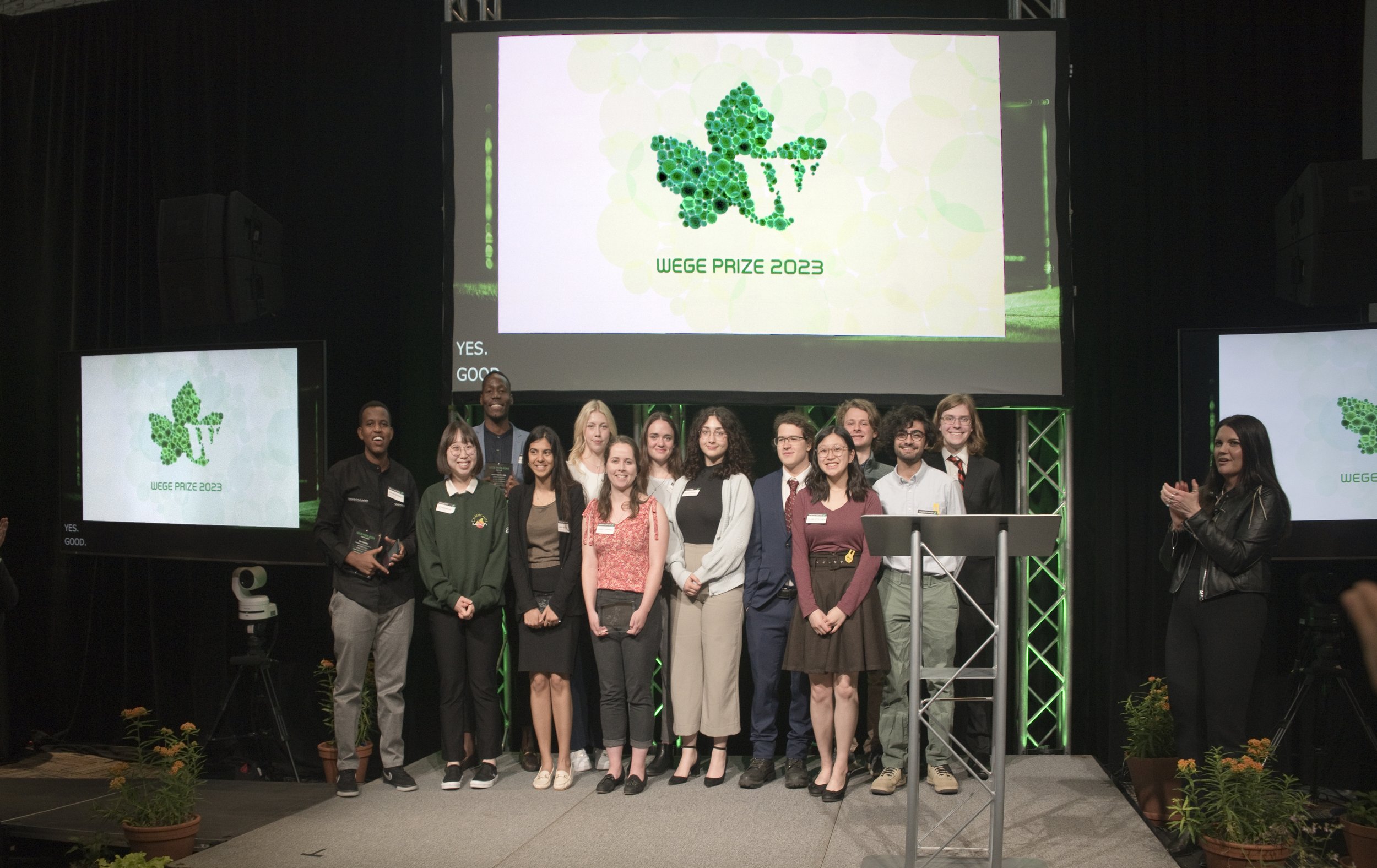
Grand Rapids, Michigan, USA, June 5, 2023 —Three stand-out university student teams from around the world have taken winning spots in 2023 Wege Prize for their ground-breaking solutions to further a circular economy through sustainable approaches that mitigate waste and maximize productivity.

Organized by Kendall College of Art and Design of Ferris State University (KCAD), Wege Prize challenges fiveperson student teams worldwide to collaborate in the advancement of sustainable solutions to today’s “wicked problems” in ways that support a circular economy. Each of this year’s five finalist teams is sharing in the competition’s $65,000 USD in prize money for developing solutions that address agricultural waste, environmental pollution, and wastewater.

For the past decade, Wege Prize has identified winning teams in the interdisciplinary competition, with this year’s top three groups hailing from five countries and six academic institutions. The awarded teams faced an initial pool of 50 competing team representing 37 countries as they progressed through a narrowing selection of contenders during the nine-month, multiphase competition.

Wege Prize teams are inspired to reframe traditional production and consumption methods through a multidiscipline, immersive process encompassing diverse fields of study, cultures, and institutions. The teams’ intensive research, testing, networking, and prototyping is supported and refined through direct feedback from the competition’s panel of expert judges.

“The brilliant student teams that compete in Wege Prize give me hope that humanity will solve the serious ecological problems we face by designing equitable business models that regenerate nature and add economic value,” says sustainable business expert and core judge for Wege Prize, Bill Stough.

The winners of Wege Prize 2023 are:

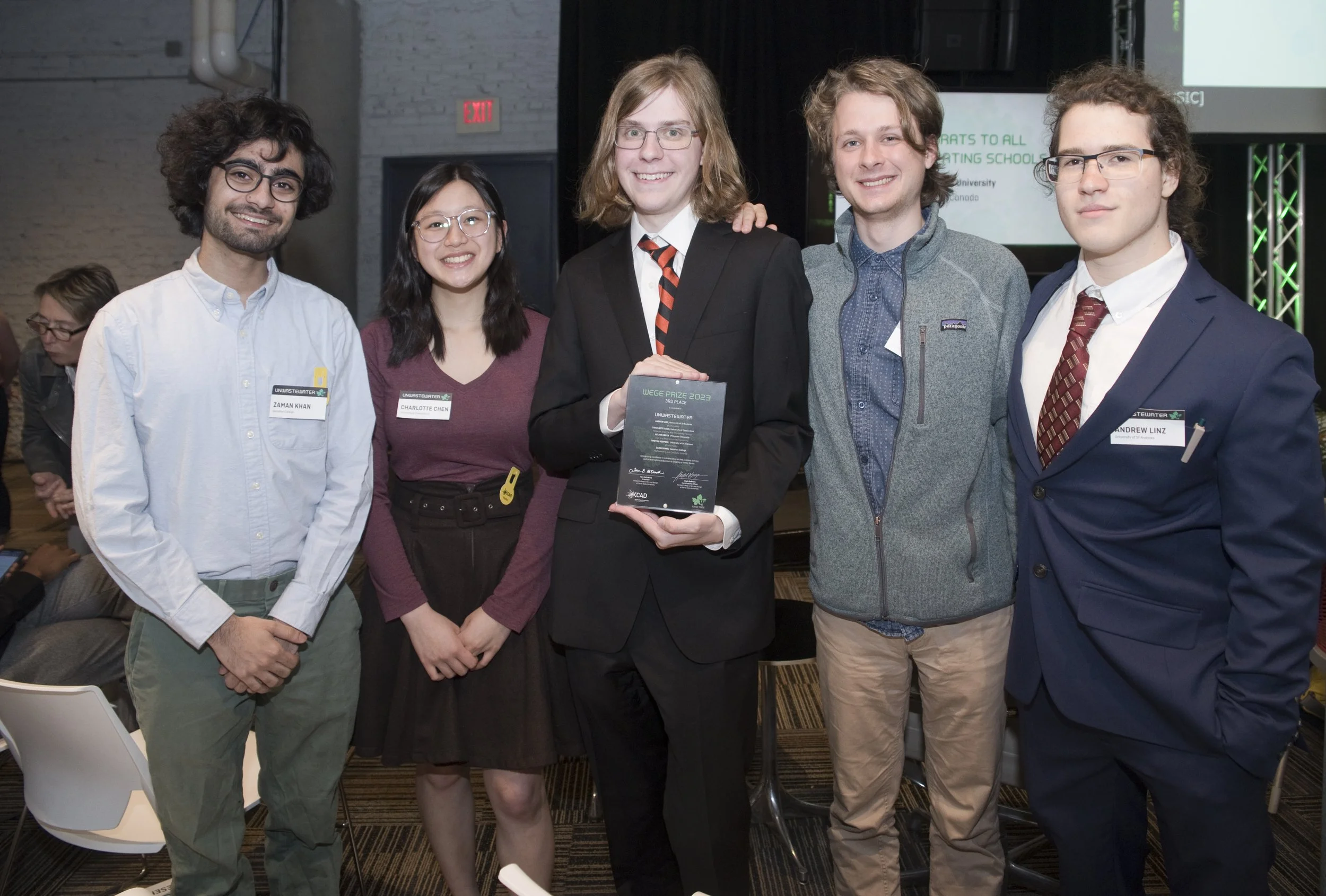
  • 3rd Place ($10,000): UnWastewater, a team using microbes to convert wastewater into raw materials for use in industrial and commercial products, closing the circle between the production and disposal of pharmaceutical chemicals.

  • 2nd Place ($20,000): Green Poultry Farm addresses environmental impacts of poultry farming, with the Mozambique team’s students using anaerobic digestion to create usable waste streams.

  • 1st Place ($30,000): Banana Leather whose team from Yale University’s business and environmental management programs is producing a sustainably made plant-based leather, mainly from banana crop waste.

Two other student teams, Cellucoat and Agri ThinkTank, each received $2,500 awards as finalists.

“Having a framework like the Wege Prize to kind of streamline our idea–the business model, the feasibility, the down-streaming impact, the social impact–has just been a way that we’ve had to develop this and forced us to think things that have been really helpful and instrumental in propelling this business forward,” says Jinali Mody, lead of the Banana Leather team, first-place winner of 2023 Wege Prize Award.

Wege Prize participants come from diverse academic programs at leading universities worldwide, including students from U.S. Ivy League schools to national science and technology universities in India, Africa, the United Kingdom, Canada, and other countries. The teams’ solutions are making a real-world impact. The 2019 finalist Rutopia’s eco-sensitive tourism concepts, covered by top editors at Forbes, gained funding and support. Others, like 2020 Wege Prize winner Hya Bioplastics and the 2021 team The Chilensis, have advanced to prestigious business incubators that lay the groundwork to implement their prize-winning ideas.

“Each participating Wege Prize team’s innovative ideas for new ways to develop products, services, and business models help drive a regenerative, circular economy,” says Gayle DeBruyn, KCAD professor and Wege Prize organizer. “We are proud of this year’s winners and grateful for all of our student teams and dedicated judges in their pursuit and support of real-world solutions to pressing global issues.”

Wege Prize is made possible through the continuing financial support of The Wege Foundation and KCAD, opening these unique opportunities for undergraduate, graduate, and post-graduate students around the world — and helping take strides toward a greater circular economy.


MORE ABOUT THE WINNING TEAMS

Jinali Mody presenting for team Banana Leather in Grand Rapids, MI at the 2023 Wege Prize Awards

1ST PLACE ($30,000) –
BANANA LEATHER

Institution represented: Yale University
Disciplines represented: Business and the Environment, Industrial Ecology and Green Chemistry, Energy and Business, Energy Access, Business Administration

Producing plant leather from banana crop waste to create Ban-o-fi (for banana-fiber leather), this team’s material is comparable to animal hide in performance, but on a development pathway to being 100% biobased and biodegradable. Paired with a take-back program, their product expands the potential applications for the material and sets a new precedent for leather alternatives. While many current vegan leathers are plastics with potential environmental impacts, Banofi is vegan, cruelty-free, sustainable, and circular, “disrupting the highly polluting textile industry,” says the team. The material’s production upcycles crop waste, uses 90% less water and has 95% lower carbon emissions than animal leather.

“Our solution looks to create plant-based leather from crop waste — mainly the banana stem, which is left on fields to decay. The impact of this solution will be significant carbon emission savings, the number of livestock and exotic animals saved, the crop waste that is upcycled, waste-water pollution and heavy metal pollution avoided, resource reduction and additional income for farmers.”


Vasco Cossa presenting for team Green Poultry Farm in Grand Rapids, MI at the 2023 Wege Prize Awards

2ND PLACE ($20,000) –
GREEN POULTRY FARM

Institution Represented: Eduardo Mondlane University (Mozambique, Africa)
Disciplines Represented: Physics, Environmental Chemistry, Agronomic Engineering, Electronic Engineering

Taking on the wicked problem of environmental pollution associated with poultry farming in Mozambique, this team’s innovative system concept converts poultry waste into biogas and biofertilizers to meet energy needs within poultry production — and to grow feed to supplement farm animals’ diets.

The system’s biodigester system’s innovative use of anaerobic digestion converts poultry waste into biogas and biofertilizers. The biogas is converted into electricity and heat to meet energy needs within poultry production, and the biofertilizer is used to grow feed for the poultry. This promotes the maximum use of resources and contributes to the circular economy by keeping major pollutants in the loop.

“We identified anaerobic digestion as the approach that can address these wicked problems through waste recycling,” says the team. “It can aid in addressing both planetary boundaries and sustainable development goals.”


Team UnWastewater from left to right: Zaman Khan, Charlotte Chen, Kelvin Green, Timothy Redpath, Andrew Linz

3RD PLACE ($10,000) –
UNWASTEWATER

Institutions Represented: Princeton University, Hamilton College University of St. Andrews (Scotland, United Kingdom), University of Connecticut
Disciplines Represented: Engineering, Computer Science, Biochemistry, Engineering, Biology

With the cycle of nature as its model, the team is looking to the premise of a circular economy to create a world without waste by designing closed loop systems to maximize efficiency, prevent pollution and achieve sustainability. To realize this ambitious vision, UnWastewater aspires to revolutionize the treatment of domestic wastewater by utilizing microbial electrosynthesis (MES).

This novel method of biochemical carbon capture and utilization is used to convert domestic wastewater into organic chemical feedstocks, and ultimately, protect the environment, human health and regenerate nature.

“The very term ‘wastewater’ belies the implicit assumption that this byproduct is valueless rather than a legitimate resource,” says the team. “We aim to demonstrate that this assumption is false; that even a substance as undesirable as wastewater has the potential to be an important industrial feedstock.”


About Wege Prize
Wege Prize, a West Michigan-born concept developed by Kendall College of Art and Design of Ferris State University’s (KCAD’s) Wege Center for Sustainable Design with the support of The Wege Foundation, is an annual competition that ignites game changing solutions for the future by inspiring college students around the world to collaborate across institutional, disciplinary, and cultural boundaries and redesign the way economies work.

About KCAD
Located in the heart of downtown Grand Rapids, Michigan, Kendall College of Art and Design of Ferris State University (KCAD) is committed to creating lasting impact in West Michigan and beyond through collaborative partnerships, cultural innovation, and an educational model that prepares students for leadership in design, the visual arts, and art history; provides innovative, collaborative education that fosters intellectual growth and individual creativity; and promotes the ethical and civic responsibilities of artists and designers, locally and globally. For more information, please visit kcad.edu.

About The Wege Foundation
Planting seeds that develop leaders in economicology, health, education, and arts, and enhance the lives of people in West Michigan and around the world. For more information, please visit wegefoundation.com.


Follow Wege Prize on KCAD’s Wege Center for Sustainable Design page on LinkedIn, Facebook (@wegeprize), Twitter (@wegeprize), Instagram (@wegeprize), for more content, updates on participants, and more.